The quote is the product, so the quote belongs on the page
The agent quote builder: customization designed like a product configurator, with the quote taking shape beside every choice.
- Role
- Product design: research, interaction, visual direction
- Timeline
- Jul 2025 – Feb 2026
- Surface
- Agent quote and bind
- Status
- Shipped
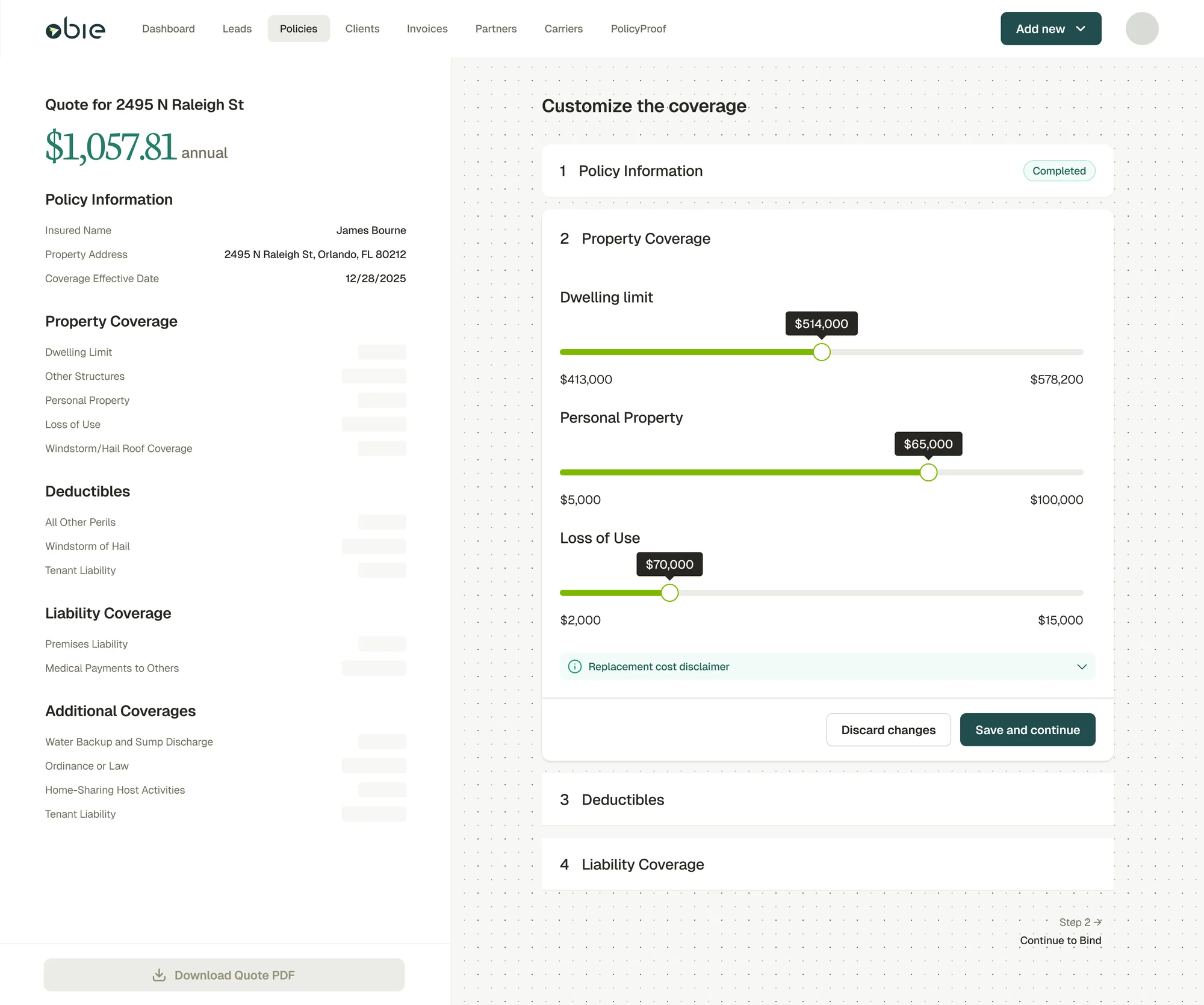
Agents see their job as building a quote, the document they send their client. So I designed customization like a product configurator, the way you build a car or spec a laptop: choices in the workspace, the quote beside them.
This page is about the interface. How it got built, and what that cost, is told in Breaking the Handoff: this is the project that broke us, seen from the other side.
The quote never leaves the page
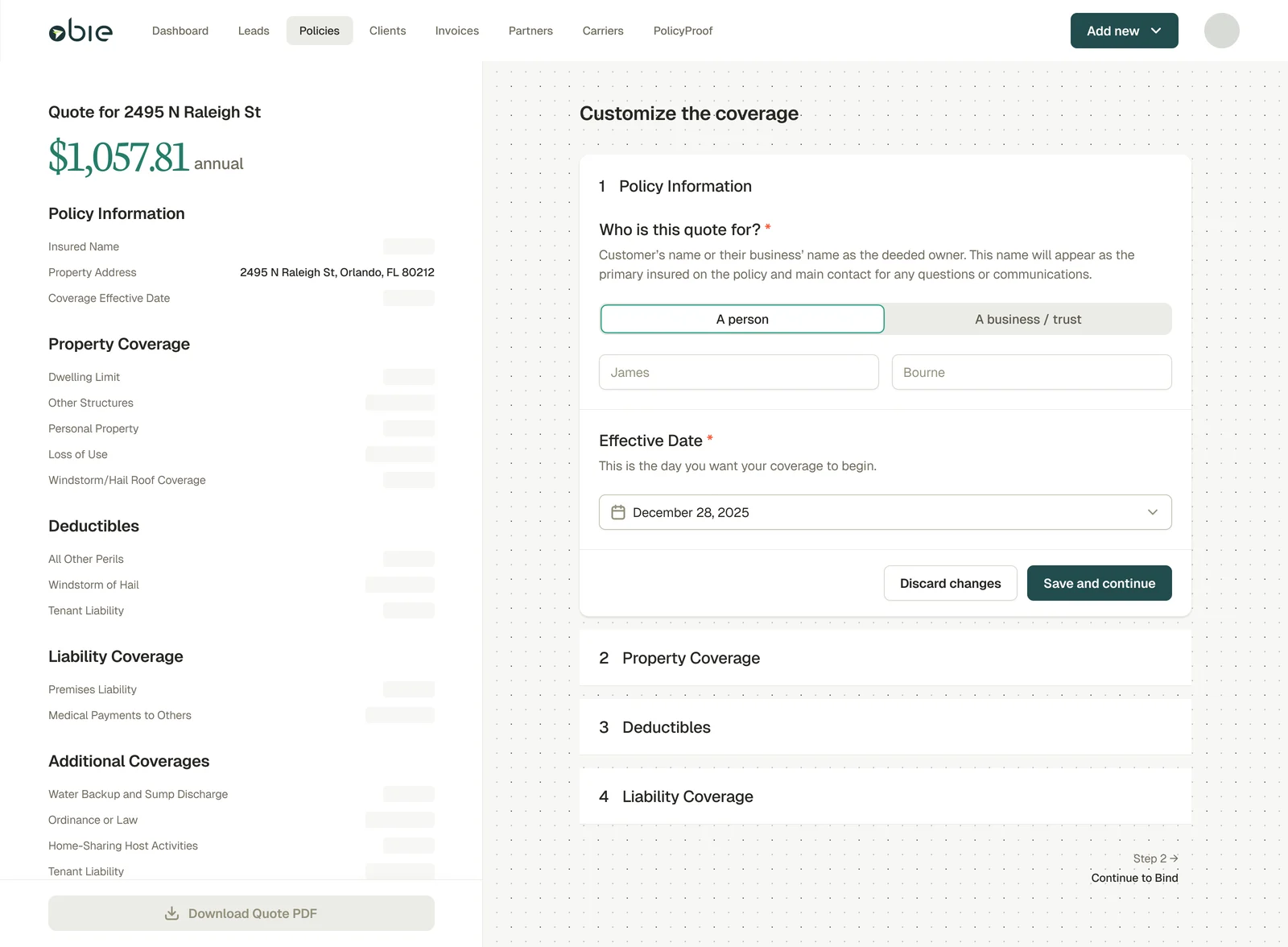
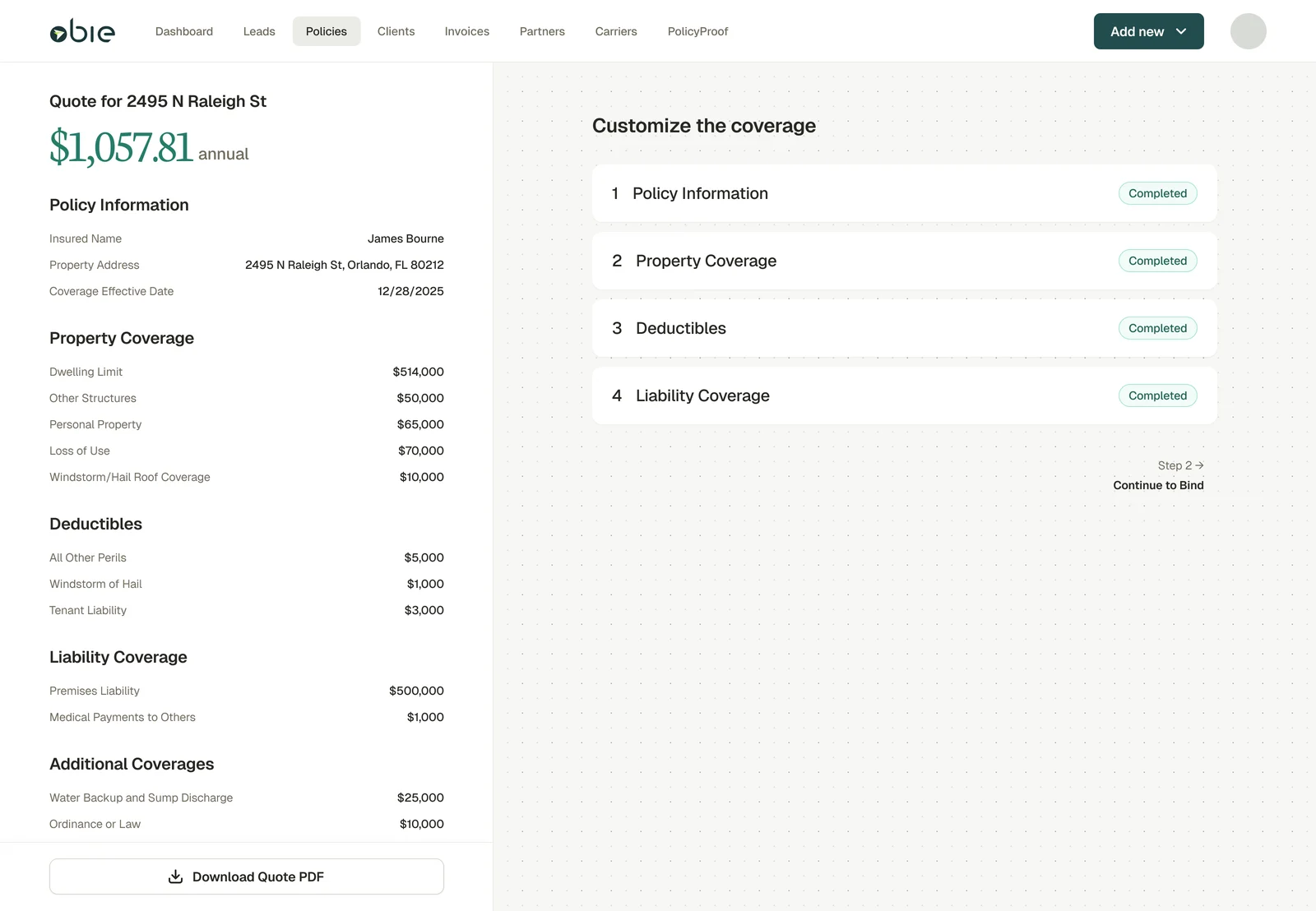
Every screen has two halves. On the left, the quote: the premium at the top, then every line the agent will send. On the right, the decisions, one module at a time: policy information, property coverage, deductibles, liability.
A line on the left stays a quiet placeholder until its module is saved. Then it fills in with what the agent chose, and the module collapses to its name and a Completed mark. The agent never has to imagine the document. It assembles in front of them.
The contract, written down
The hard part of a configurator isn’t the controls. It’s what each control does to the number, and what it does to the document. I wrote those rules into the design file, in plain language, where engineering would read them.
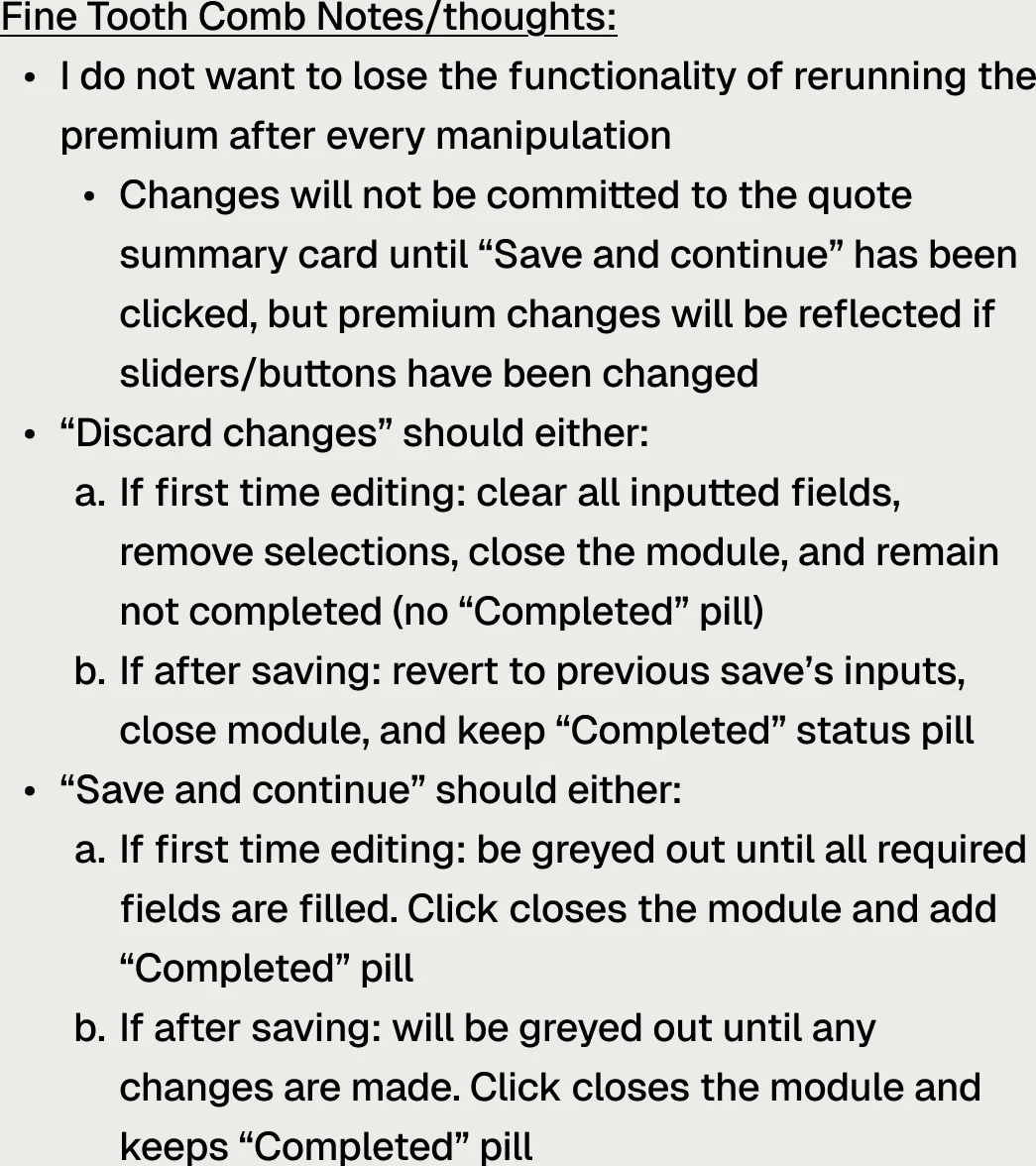
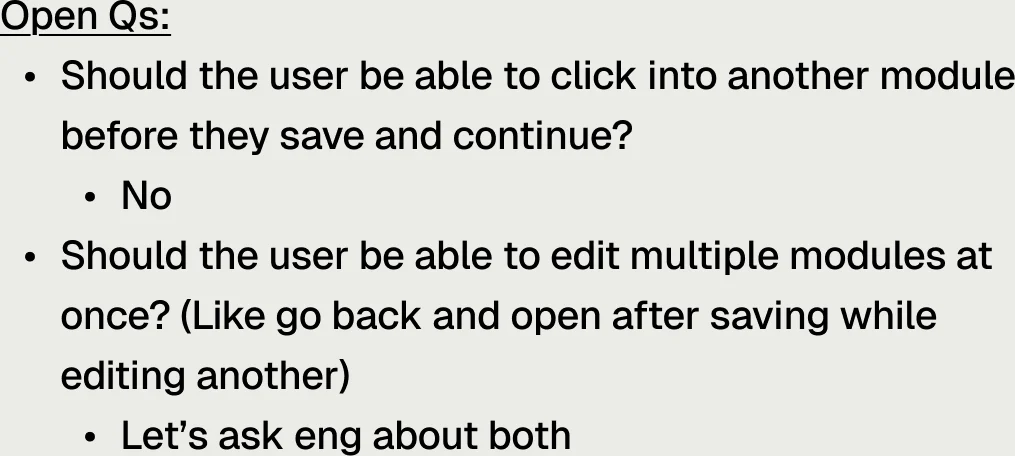
Three decisions live in those notes. The premium reruns on every change, because the price is the point and agents compare as they go. But nothing commits to the quote until Save and continue, so the document an agent sends never shows a half-made choice. And Discard means two different things: the first time, it clears the module; after a save, it puts back the last saved version and keeps the Completed mark.
The open questions were written down the same way, each with its best answer so far, and one instruction under both: let’s ask eng.
Where regulation becomes interface
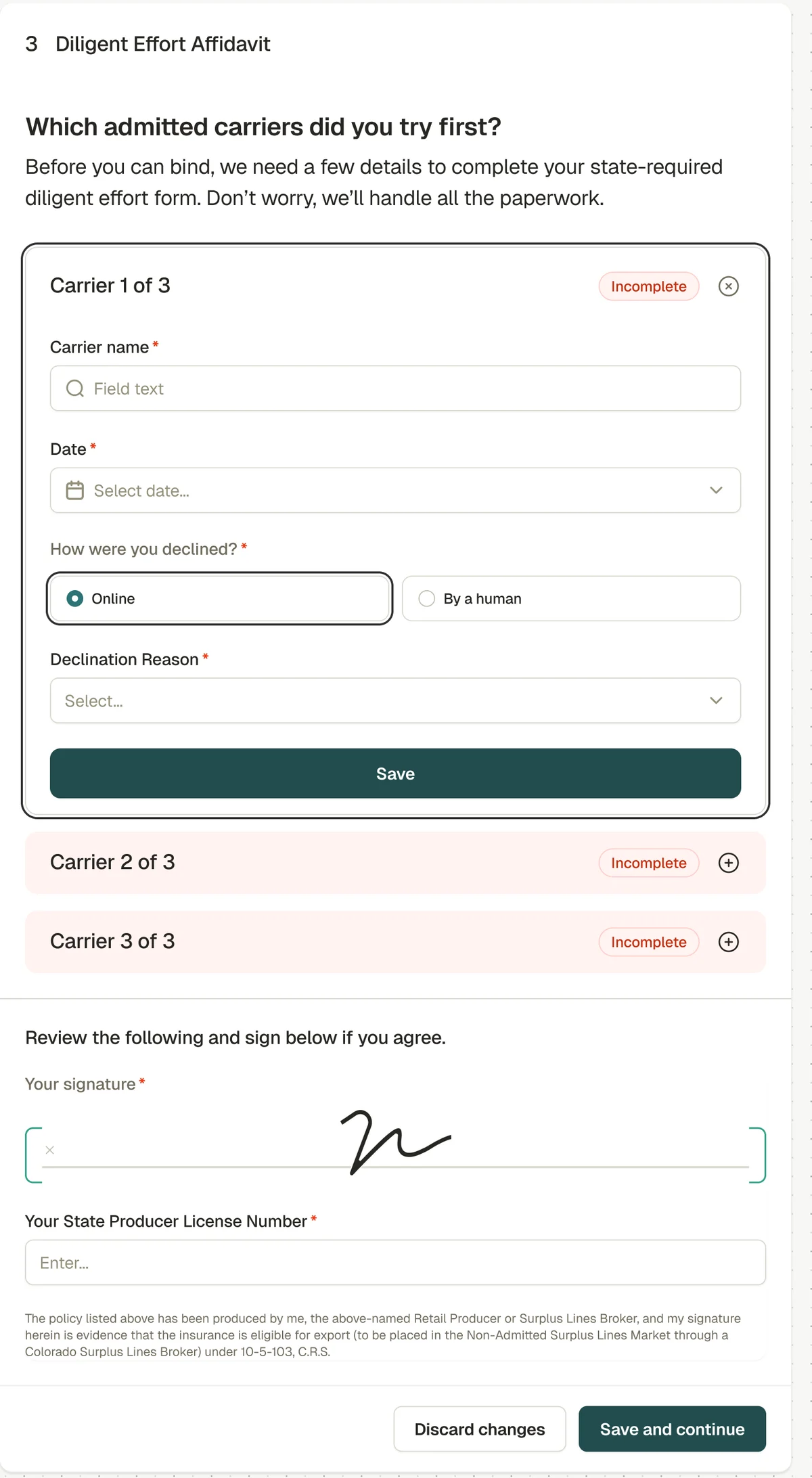
The last stage, Complete to bind, is where the state gets a say. In the design file’s example, binding requires a diligent-effort affidavit: which admitted carriers the agent tried first, how each one declined, and why, signed with the agent’s producer license number.
The design treats it like every other module. Three carrier cards, each marked Incomplete until it’s saved. Then a signature, the license number, and the legal attestation in full beneath them. The sentence at the top does the calming: “Before you can bind, we need a few details to complete your state-required diligent effort form. Don’t worry, we’ll handle all the paperwork.”
How agents took it
At conferences, the thing agents told our agency-development team most often was that this was the smartest quoting interface they’d seen.
That came to me secondhand, and nobody wrote it down. It’s here because it’s what they kept hearing.
Where it stands
Shipped in February 2026. The first release made the quote PDF available during customization, with coverage cards that mirror it line for line.
The interaction at its center was re-decided after the build began. That story, and what it cost, is in Breaking the Handoff; the delivery system sets its timeline beside a core account page’s.
Building something in this lane? Email me.