Megan Casebier

Senior product designer · design engineer

If I’ve already built it in working code,
why am I handing engineering
a picture of it?

I asked that all year. Now every project I touch starts with one.

The prototypes existed anyway. This year I made them the first move: to understand the problem, to let people feel the flow, and to hand engineering something it could adopt.

The short version

Working prototype · a made-up lender

What I’d tell you on day one.

Tidemark is a small-business lender that doesn’t exist. Its payment-exceptions screen has been stuck in review for a month. This is the prototype I’d build in week one. Click around, then make the decision that unsticks it.

The prototype needs JavaScript to run.

A working prototype, not a picture of one. A made-up company with made-up data. The read that goes with it is below. Source on GitHub →

A read · for Tidemark, a made-up small-business lender

The stuck screen: payment exceptions

What’s actually stuck
Not the layout. Nobody owns the call on who resolves a short-paid loan, servicing or the account manager, so every design review re-asks it and the screen goes back to the backlog.
What I’d do first
Rebuild the queue as a working prototype organized around the loan, not the payment: one row per loan in trouble, every payment attempt under it. Then put it on screen in a thirty-minute session and get the ownership call made in the room.
The states it needs
Open, waiting on the borrower, short-paid, resolved. Your current screen has two of them.
Am I the right person
Yes. This is a workflow problem where the product is the operations. If the real blocker turns out to be the data model, you need a backend engineer first, and I’d tell you that.
The one-page read that goes with the prototype: what’s actually stuck, and what I’d do first.

Product craft

Design · Obie, 2025–26

The agent quote builder

An animated recreation of the design (Nov 2025): choices on the right, the quote taking shape on the left. The first release, in February 2026, put the quote PDF inside customization. Fictional data.

The quote is the product, so the quote belongs on the page

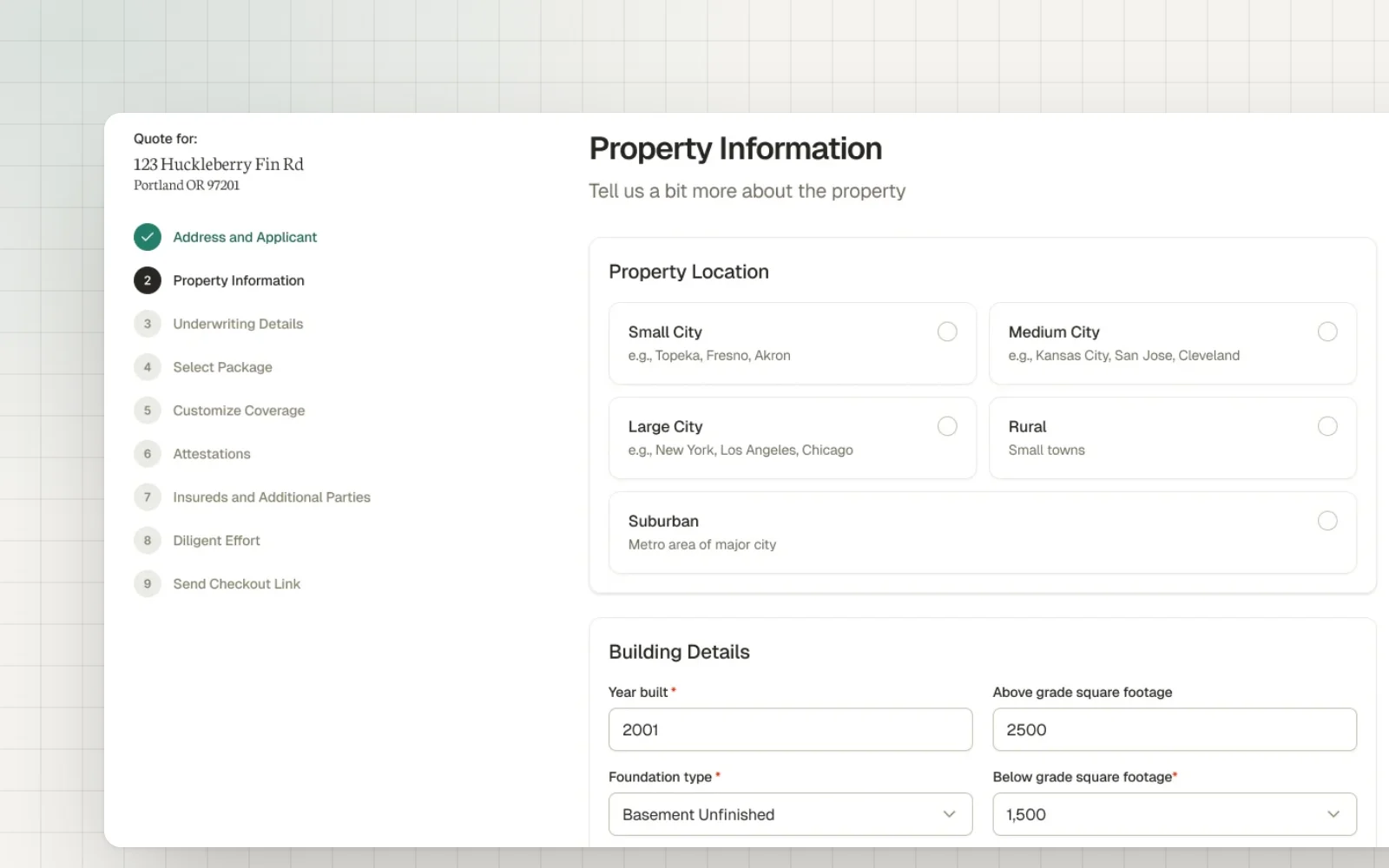
Agents see their job as building a quote, the document they send their client. So I designed customization like a product configurator, the way you build a car or spec a laptop: choices in the workspace, the quote beside them. The first release made the quote PDF available during customization, with coverage cards that mirror it line for line.

At conferences, the thing agents told our agency-development team most often was that this was the smartest quoting interface they’d seen.
Read the case study

Writing

Writing · the story of the year · 13 min read

Prototypes, end to end

This year, a clickable prototype went from a last-resort trick to the first move on every project I touched. This is how that happened, one project at a time.

Read the case study

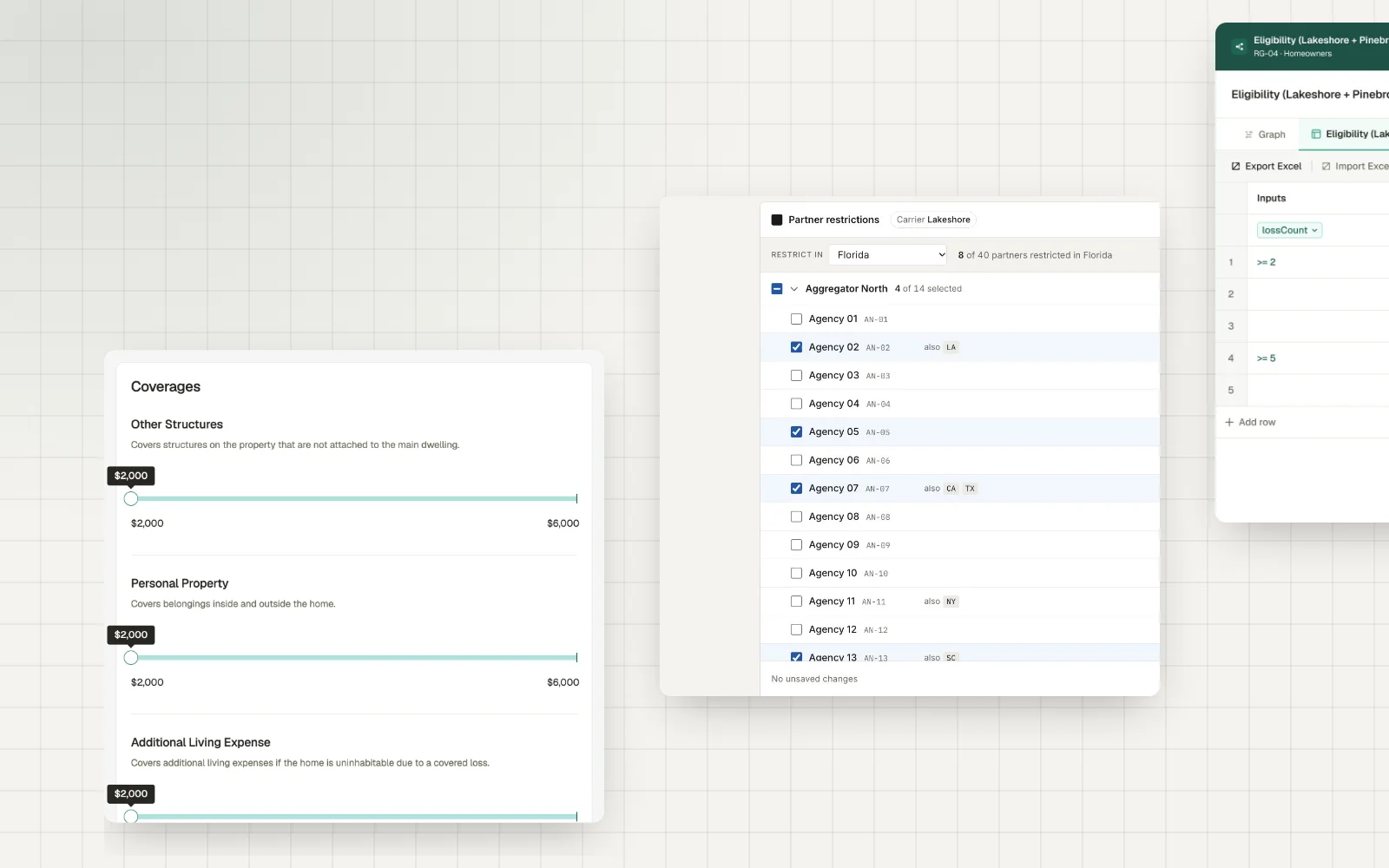
The February 2026 coverage sliders prototype, hand-written HTML: a Coverages panel with an Other Structures slider at $2,000, before any of the later tooling. Fixture values.
Megan Casebier

Design is the work that makes it possible for the business, the builders and the people using it to end up wanting the same thing.

An agent building a quote. A policyholder checking what they owe. An underwriter deciding on a risk. And an engineer, opening whatever I hand them. Designing for that last one is why our handoff became working software.

More about me